That is the question. I had an interesting conversation on the market stall on Saturday about why I don’t produce tea bags. I do have a few packs lurking around which was to test the market, but that’ll be the last of them. The question should be “do you want to be consuming plastics even if they are derived from plants”?
The tea industry has taken great strides in replacing plastic tea bags made from synthetic plastics and plastic sealants, with plastic made from plant compounds. This is a big step forward as the “plant-based” plastics are compostable in industrial facilities, but alas not the garden compost. But it is confusing right, and marketing departments have ensured that using the tag “plant-based” becomes synonymous with health.
But and do your research, these compounds are still plastic. They will degrade into microplastics in the environment, and as with synthetic plastics, will enter your body when you’ve brewed with them.
I do like the FAQs from Taylor’s of Harrogate who make Yorkshire Tea – a very good tea indeed. They explain the different types of plastic clearly, and are typical of the large industrial firms who have switched to plants. For smaller tea manufacturers, many are still using nylon to create their pyramids or tea temples. I often pick these up at markets, and to be honest, if someone gifts me some tea bags, I cut them and put the loose leaves in a pot. That does not help the environment though.
Some of the costs
Here’s an excerpt from a book I’m writing on herbal tea that explains some of the costs.
“My main concern is the tea bag material. The tea industry has worked hard and most of the big brands have changed to plant-based biodegradable plastics[i], but these are still plastics that are only industrially compostable and you need access to a food waste bin to discard them. The alternative is you put them with your general household waste and the plastic accumulates somewhere in the natural environment. In one study the biodegradable teabags made from polylactic acid (PLA) which comes from corn starch or sugar cane, the material stayed quite intact within a compost facility and killed off some of the worms[ii]“.
[i] Unilever (2020). https://www.unilever.co.uk/news/press-releases/2020/pg-tips-makes-move-towards-a-fully-plant-based-range/
[ii] Plymouth University (2024). https://www.plymouth.ac.uk/news/study-suggests-biodegradable-teabags-don-t-readily-deteriorate-in-the-environment-and-can-adversely-affect-terrestrial-species
It is also established that microplastics accumulate in our bodies, and it may be risk factor for dementia. That is terrifying.
What to do?
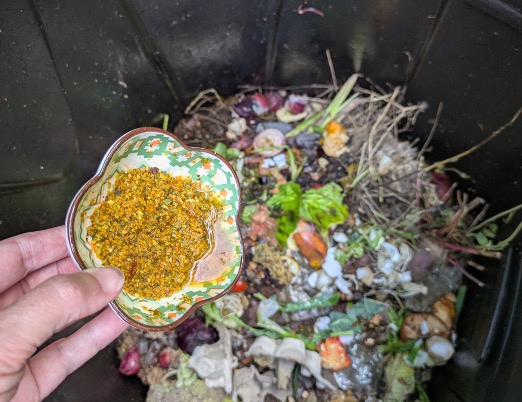
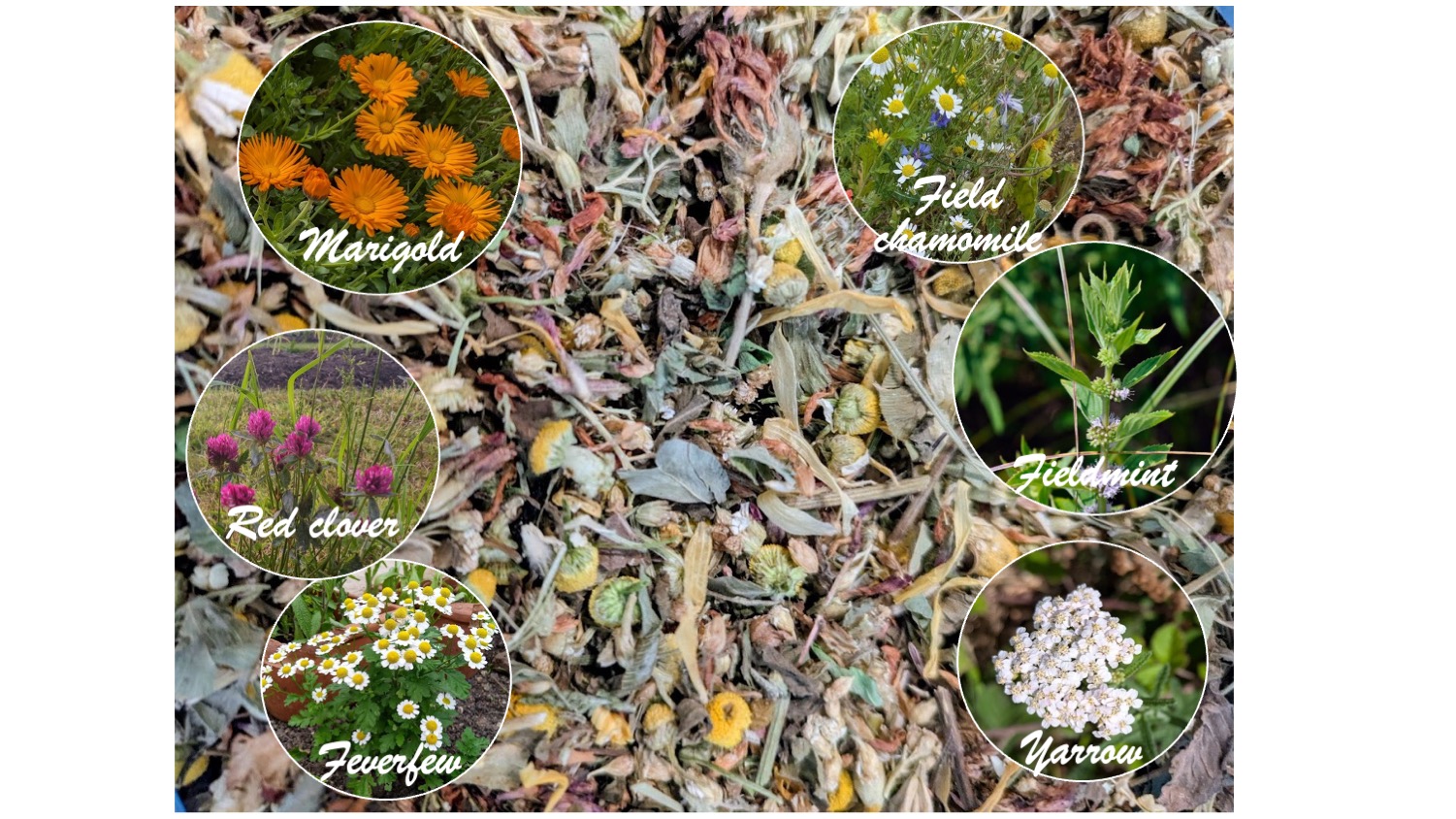
Use loose tea whenever you can – as you’ll read on this blog that is so much better for the environment and also you. Plus it makes a stronger and tastier tea compared to dunking a bag in a cup. The featured image shows how easy it is to put the spent leaves on your compost. Happy days.