Yesterday I did a webinar all about herbal tea for the National Centre for Integrative Medicine (NCIM) folk in Bristol. NCIM are an inspiring group trailblazers in the space of transforming healthcare by educating professionals, and also by providing services to the public that are holistic and empowering. Integrative healthcare encompasses many approaches that we can use for self-care – like blending herbal teas, meditation, breath work, or more specialist care by registered professionals such as acupuncture, yoga, herbal medicine and homeopathy.
I think my fundamental interest in creating herbal teas, and also sharing with people how to create their own, is all about our daily wellbeing. I know there are some pretty big challenges out there, but if we can take a small step to care for ourselves and to avoid taking a medication, this helps us and the planet. I create Wayside teas as sustainable as I can and I know I’m not there yet, but loose teas have to be the way to go as they ditch the plastic. Yes unfortunately plant-based plastic bags are not home compostable so really aren’t much better than synthetic plastic. Also, the additional manufacturing is energy intensive.
I talked the best herbal teas to buy in the shops, and what to look out for on the packs and labels as what the tea is called does not always reflect the herbs used. Also many cheaper teas contain flavourings which can be synthetic.
How to blend?
It was super to hear how many of the participants – about 55 I think attended – were already growing and making their own teas. To create a recipe there are no rights and wrongs. I just recommend to do what is tasty and to start with the herbs and spices people know. Don’t follow everything you see on the internet as plants can be poisonous, and I recommend introducing new ingredients by doing a foraging day or workshop with a herbalist. As many herbs can be bitter and drying in the mouth, a tip for neutralising that is to introduce something sweet or sour. That’s why black tea goes well with orange or lemon, and green tea goes well with mint.
How to start?
One way to get blending is see what ingredients are in your favourite herbal teas. The back of the packs should list the ingredients and they should be ordered by largest quantities first. To build up your store cupboard you can start gathering herbs by growing and drying them, use what is in your kitchen cupboards already, or purchase from organic suppliers on the web. I use Baldwin’s herbs but there are other reputable suppliers out there. At lush times of the year like spring and autumn, you can forage for nutritious nettle or dandelion, or all the berries later on. These can be used fresh or dried to keep for longer.
Try and drink a rainbow!
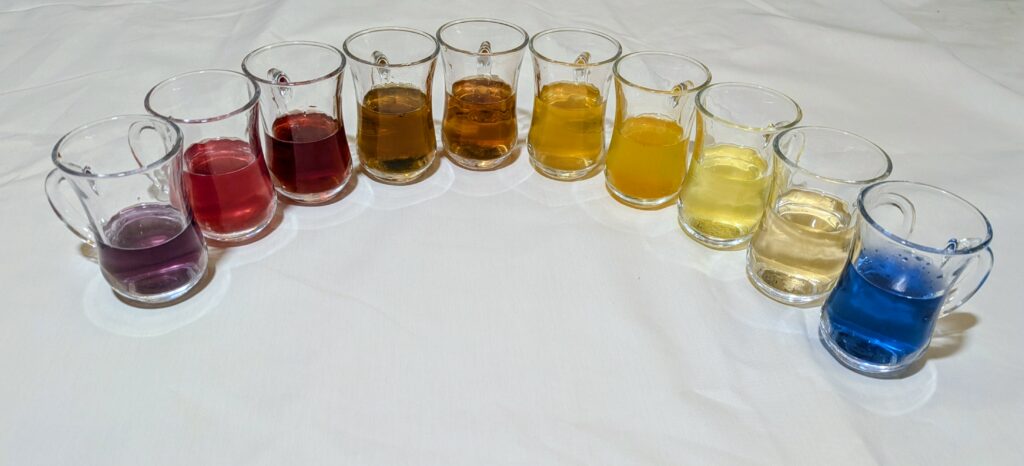
Herbal teas can nourish us all day long. Try and drink a rainbow of colour as we know that the colourful polyphenols are good for us, and the science shows you don’t need huge amounts and certainly not even a teaspoon a day. I believe that 2-3 cups of herbal tea can deliver what we need, but go for diversity of colour, which fortunately is beautifully supplied by herbs and spices. One thing they are not is beige!! For your yellows think lemon, marigold, for greens go for mints and balm, for reds go for berries, hibiscus or rose hip. For blue you can actually buy blue tea, but I cheated here slightly with red cabbage. OK it might not taste the best but look at that colour and goodness!
If you would like to know more about herbal tea, or would like a talk for your event or group to learn more about wellbeing, then do reach out. I’d be more than happy to help.