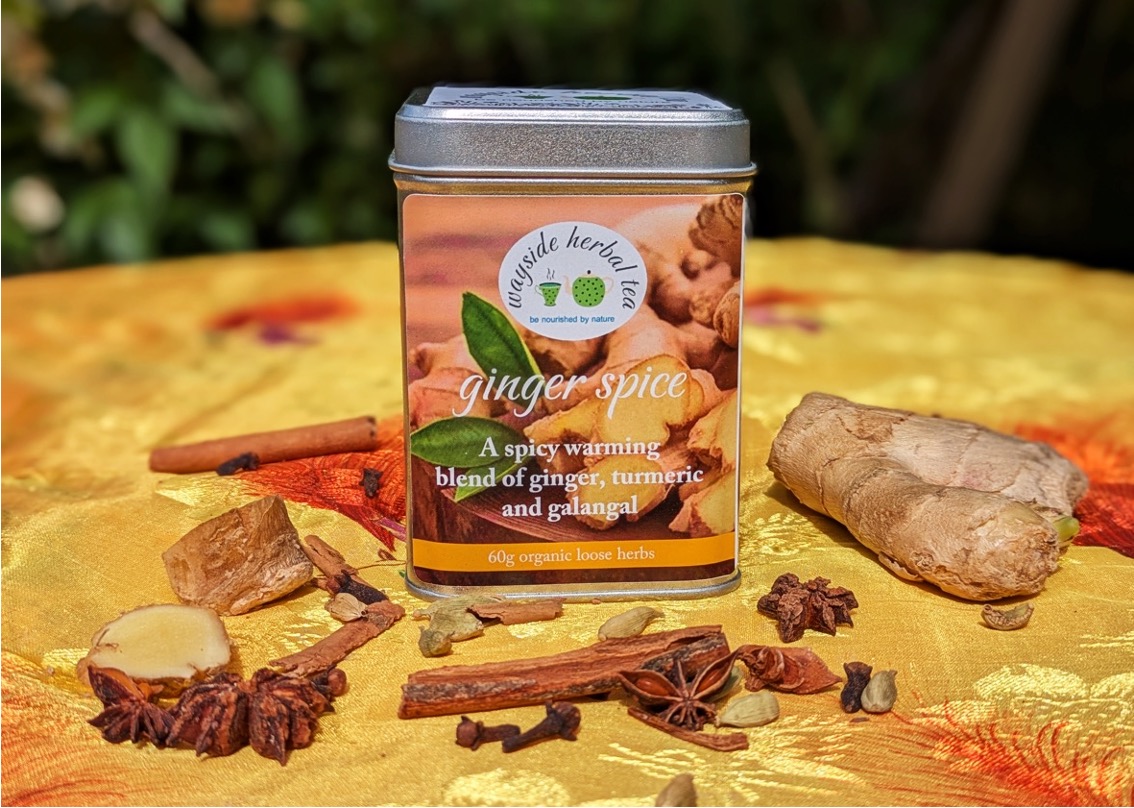
This tea is one of my favourites – and yours! I’ve spent the day topping up the supplies again.
The loose herbal tea features organic ginger, turmeric and galangal – all of those knobbly roots that you put into Thai food. They are all part of the ginger family and whilst they might look similar, they taste so different.
Ginger (Zingiber officinale) is hot and firey with quite a sweet taste. It is aromatic, pungent and hot, and the dried chopped ginger in this tea blend has lost none of its punch. Ginger in a tea can help soothe nausea, and we know that it is an anti-inflammatory so may remedy other gut issues. If you have fresh ginger this also can be chopped to make a tea, and it can also be used in a foot-bath to warm the tootsies and boost the circulation. Ginger on the skin as a poultice can also help with pain. But it is a firey herb and does not suit everyone – some might go for cooling mint or fennel to help with digestive issues.
Turmeric (Curcuma longa) is possibly my all time favourite herb. It has a delicate almost citrus flavour. It is aromatic and slightly bitter although this is not a strong taste. It is traditionally used in Ayurveda to get the digestion moving – or light the digestive fire – quite a revered herb and delicious in a hot milk chai. It is absolutely wonderful in tea and I would urge you to try it if you haven’t. Turmeric is very well researched, and like ginger is also an anti-inflammatory and can relieve pain. You’d need to drink two or three strong cups to consume enough.
There is Lesser Galangal (Alpinia officinarum) in this blend. There are various galangals and the lesser variety is the most pungent. It is aromatic and hot, and more often used in Thai cooking. But I think it adds a surprising element to the tea and balances out some of the heat from ginger.
The other herbs in the blend are there to give balance to the fiery three! But this tea is not meant to be subdued and is a great one to have first thing in the morning to energise you.
PS do note that all of this information is educational. If you wish to use herbs medicinally for something other than day to day wellbeing, then do consult with a Medicinal Herbalist or Doctor.